



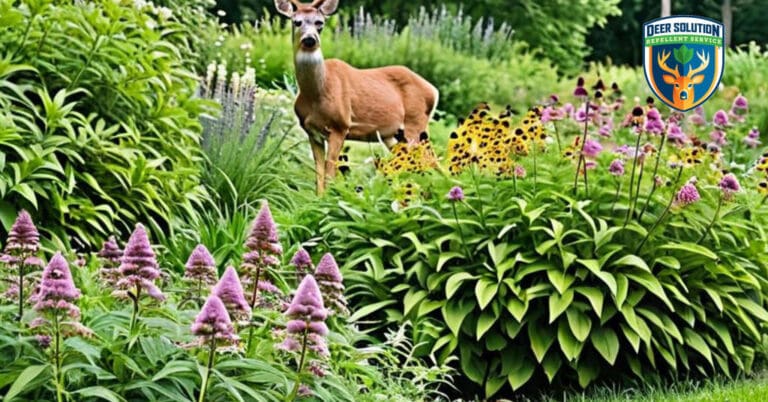
Deer seldom eat Joe Pye weed, though the species differ in how resistant they are. Cornell Cooperative Extension of Albany County lists Joe Pye weed among perennials rarely damaged by deer, and the Native Plant Society of New Jersey includes it on its list of native deer-resistant plants. NC State’s plant database calls spotted Joe Pye weed resistant to deer damage and hollow Joe Pye weed moderately resistant. These are tall perennials, with NC State putting spotted Joe Pye weed at 4 to 7 feet and sweet Joe Pye weed at 5 to 7 feet. So do deer eat Joe Pye weed? Seldom, though deer may still browse it under pressure.
Do Deer Eat Joe Pye Weed?
Deer seldom eat Joe Pye weed. Cornell’s Albany County extension office places Joe Pye weed among herbaceous perennials rarely damaged by deer, and the Native Plant Society of New Jersey includes Joe Pye weed on its list of native deer-resistant plants, under the genus name Eupatorium. Cornell cautions that no plant is completely immune from deer, particularly where deer densities are high.
Is Joe Pye Weed Deer-Resistant?
Joe Pye weed is commonly considered deer-resistant, though deer may still browse it under pressure. NC State describes spotted and sweet Joe Pye weed as deer-resistant and hollow Joe Pye weed as moderately resistant.
Do Deer Treat Every Kind of Joe Pye Weed the Same Way?
No, the Joe Pye weed species differ in how well they resist deer.
NC State describes spotted Joe Pye weed (Eutrochium maculatum) as resistant to damage by deer, and it lists deer and rabbits among the plant’s resistances.
Sweet Joe Pye weed (Eutrochium purpureum) has deer listed among its resistances on NC State’s page.
Hollow Joe Pye weed (Eutrochium fistulosum) gets a more cautious description. NC State calls it moderately resistant to damage from deer.
The difference is one of degree. Spotted and sweet Joe Pye weed are listed as deer-resistant, and hollow Joe Pye weed is described as only moderately resistant.
Do Deer Eat the Plants Once Grouped With Joe Pye Weed?
Joe Pye weed was once classed in the genus Eupatorium, and two plants still listed under that name are seldom damaged by deer. Rutgers rates mistflower (Eupatorium coelestinum) as Seldom Severely Damaged and white snakeroot (Eupatorium rugosum) as Seldom Severely Damaged, and Iowa State lists white snakeroot among perennials seldom damaged by deer. Joe Pye weed itself is now placed in the genus Eutrochium, and Rutgers does not list it.
How Deer Solution® Helps Protect Joe Pye Weed and the Plants Around It
Deer Solution can help protect Joe Pye weed and the plants deer favor more with a recurring professional repellent service built around your property. Your local Deer Solution team brings Certified Deer Damage Expert® expertise, highly trained technicians, proprietary liquid and granular repellents, and ongoing support to a treatment program fitted to your property and its deer pressure. A repellent program matters most for the plants deer favor. Protecting those favorites can also ease the pressure on the taller natives around them.
The proprietary repellent is all-natural, made with essential oils and other natural ingredients, and works through taste and smell to make treated landscaping less appealing to deer. It dries clear, has no foul odor once dry, and is rain-fast once dry. Most customers get recurring professional treatments, typically monthly, with extra visits scheduled when the program and deer pressure call for them. Service runs year-round because deer browse in every season.
A program works through repetition. Deer come back to spots that have fed them, and consistent professional treatments can help change what they expect to find, which is part of how professional service compares with DIY sprays. Each plan is customized to your property and adjusted with you when appropriate. No repellent makes a plant untouchable, so some nibbling can continue on treated plants, and no service can promise deer will stop visiting. The aim is to help reduce browsing.
Joe Pye Weed FAQs
Do rabbits eat Joe Pye weed?
Rabbits seldom eat spotted Joe Pye weed. NC State lists rabbits among the resistances of spotted Joe Pye weed, alongside deer and wet soil. The service targets deer browsing, so rabbit damage is a separate problem.
Is Joe Pye weed a perennial?
Yes, Joe Pye weed is a native herbaceous perennial. NC State describes sweet Joe Pye weed as an erect, clump-forming, native, herbaceous perennial that grows 5 to 7 feet tall and 2 to 4 feet wide, and says spotted Joe Pye weed can be cut to the ground in late winter.
Which other native perennials are listed with Joe Pye weed as deer-resistant?
Several native perennials appear on the same deer-resistant list as Joe Pye weed. The Native Plant Society of New Jersey’s list of native deer-resistant plants also names cardinal flower, great blue lobelia, New England aster, and wild bergamot, among others.
Will Deer Solution keep deer off my property?
No repellent can completely prevent deer from entering a property, so a deer may still pass through a treated yard. Deer Solution treatments are designed to help reduce browsing and protect a landscape. Deer are creatures of habit, so a deer that has eaten from your property before may come back, and consistent professional treatments can help change that behavior over time, whereas occasional DIY sprays usually fall short. Fencing can physically exclude deer, but it can be visually intrusive, costly, or impractical for many properties. Regular Deer Solution treatments are a practical, non-invasive alternative for protecting a landscape from deer pressure.
Contact Deer Solution About Protecting Your Joe Pye Weed
Joe Pye weed is usually left alone by deer, and the plants beside it may not be. Your local team can start with what you grow, what deer have already tried, and where treatments would be worth adding. If deer are working through your beds despite your plant choices, a conversation costs nothing and can help protect the landscape you have invested in. Schedule a Free Consultation and Estimate, find your local Deer Solution team, or call (888) 503-8313.